


Introduction: The Timeless Question of Money’s True Nature
Money has always been central to human exchange, yet its essence remains a subject of debate. Is money a tangible object we can hold, or is it a virtual construct existing only in digital systems? This question is more relevant than ever in the digital age, where physical currency and virtual value coexist, overlap, and sometimes compete. Understanding the distinction between physical and virtual money is not just a philosophical exercise; it is a practical necessity for navigating modern economies.
Last Updated: January 17, 2026

Disclaimer: I am not a licensed financial advisor, financial planner, tax professional, attorney, or employment consultant. The information provided in this blog is intended solely for general informational and educational purposes. This content should not be interpreted or construed as professional advice on financial, legal, tax, employment, or career matters. Always consult with a qualified professional before making decisions that relates to your personal situation. For transparency, some articles may include AI-assisted content. The idea is my own. All material is reviewed, edited, and approved before publication to ensure clarity and accuracy.
This exploration will dive deep into the definitions, functions, and implications of money in both its physical and virtual forms. By examining its role as a medium of exchange, store of value, and unit of account, we can uncover how money has evolved and what its future may hold.
The Dual Nature of Money: From Tangible Currency to Virtual Value
- Defining Physical Money
- Physical currency refers to tangible forms of money such as coins and banknotes.
- It is characterized by material existence, portability, and direct usability in transactions.
- Physical money has historically been the dominant form of exchange, serving as a visible and tactile representation of value.
- Its strength lies in universal recognition and immediate usability without the use of any technological infrastructure.
Why Commit to a 7-Day Money Reset Plan?
-
Understanding Virtual Money
- Virtual money exists in digital systems, represented by numbers in accounts or electronic records.
- It is intangible, relying on networks, databases, and digital platforms for storage and transfer.
- Virtual money enables rapid transactions across distances, scalability in global trade, and integration with advanced financial systems.
- Unlike physical currency, it requires trust in digital infrastructure and multi-layered security protocols.
-
Core Functions of Money in Both Forms
Money serves three universally recognized functions:
-
Medium of Exchange
- Physical money: exchanged hand-to-hand.
- Virtual money: transferred electronically.
-
Store of Value
- Physical money: stored physically and subject to wear and tear.
- Virtual money: stored digitally, dependent on system integrity.
-
Unit of Account
- Both forms provide a standardized measure for pricing goods and services.
-
Medium of Exchange
Unlock your financial freedom.
Download this FREE eBook!.
How to make $100,000/month? Stop being average and think big.
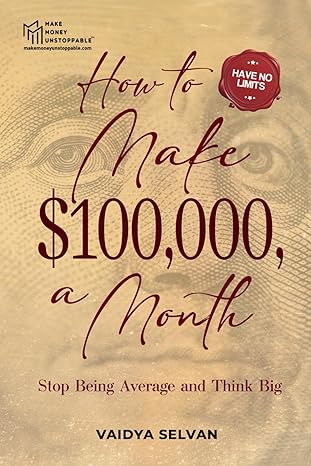
Stop Settling. Start Scaling.
Unlock the mindset, systems, and strategies top earners use to build unstoppable income.
Think Bigger. Earn Smarter.
This free eBook serves as your blueprint for scaling quickly, earning relentlessly, not settling for mediocrity, and living life on your terms.
Inside, you’ll discover:
- The Millionaire Mindset Blueprint
- Income streams that run on autopilot
- Entrepreneur hacks for focus and financial dominance
- One strategy to launch multiple income streams
- How to break free from “just enough”
- Tools to crush limiting beliefs and build your empire
Average doesn’t scale. Vision does. Download now and start your $100K/month transformation.
Yes, this eBook is free. Just drop in your email here to get instant access. ONE eBook per email.
The eBook is sent automatically and should arrive within minutes. Depending on your email provider, it may appear in your Spam or Promotions folder. While we don’t control its exact placement, you can be confident it has been dispatched and is waiting for you.
PLUS: Get Access to exclusive financial tips, learn everything about money and get early blog updates – delivered directly to your inbox .
-
Advantages of Physical Currency
- Tangibility provides psychological assurance.
- Universally accepted without reliance on technology.
- Useful in environments with limited digital infrastructure.
- Functions independently of electricity.
- Resistant to some forms of cyber risk.
-
Advantages of Virtual Value
- Enables instant global transactions.
- Reduces logistical costs of printing, transporting, and securing physical currency.
- Integrates seamlessly with modern financial systems.
- Facilitates innovation in digital commerce and financial management.
- Not constrained by outdated practices.
-
Limitations of Physical Money
- Vulnerable to physical damage, theft, and loss.
- Requires significant resources for production and distribution.
- Less efficient for large-scale or cross-border transactions.
- Difficult to track and manage in complex economies.

-
Limitations of Virtual Money
- Dependent on technological infrastructure.
- Vulnerable to cyber threats and system failures.
- Needs electricity and backup systems to operate.
- Requires digital literacy and access to devices.
- Can create challenges in areas with limited connectivity.
-
The Evolution of Money’s Role
- Money has transitioned from purely physical to increasingly virtual forms.
- This evolution reflects broader technological and economic shifts.
- The coexistence of physical and virtual money illustrates adaptability in financial systems.
- The trajectory suggests continued integration of digital value into everyday transactions.
-
Practical Implications for Individuals and Economies
- Understanding both forms of money is essential for financial literacy.
- Physical money remains relevant in some contexts, while virtual money dominates in others.
- Economies must balance infrastructure for both forms to ensure inclusivity.
- Awareness of risks and benefits enables informed financial decisions.

-
The Future of Money’s Identity
- The boundary between physical and virtual money is increasingly blurred.
- Hybrid systems may emerge, combining tangible assurance with digital efficiency.
- The future of money will likely emphasize adaptability, resilience, and inclusivity.
- The debate over physical versus virtual money is about coexistence, not replacement.
How Virtual Money Is Represented in Binary
Virtual money, like balances in your bank account, cryptocurrency, or digital wallets, isn’t stored as “coins” inside your computer. Instead, it’s represented as numbers in binary digits, meaning, 0’s and 1’s.
- Binary Basics: Computers only understand two states: 0 → off / false 1 → on / true Every piece of data, including money, is encoded using these two symbols.
- Numbers in Binary: For example: Decimal 5 → Binary 101 Decimal 100 → Binary 1100100. So if your account balance is $100, the computer stores it as 1100100.

- Floating Point Representation: Since money often involves decimals like $10.75, computers use floating-point or fixed-point formats to represent fractions. Example: $10.75 → stored as 1010.11 in binary (where .11 = 0.75).
- On the Screen: What you see on your phone or computer screen is not binary directly. The binary digits are processed by software, converted into human-readable text ($100.00), and displayed using fonts and graphics.

Behind the Scenes
Your balance is stored in databases as binary numbers. Cryptocurrencies use binary to represent wallet balances and transactions, often encoded in hexadecimal (base-16) for readability. Banking systems ensure accuracy by using fixed-point binary formats to avoid rounding errors.
For Example:
Suppose you have $25.50 in your account:
- Decimal: 50
- Binary (approx.): 1
- Stored internally as a sequence of bits: 00011001 10000000 (depending on encoding)
- Displayed to you as: $25.50
So, virtual money is just numbers stored in binary form, managed by software, and displayed in a way humans can understand.

Conclusion: Money’s Dual Identity in a Changing World
Money is both physical and virtual, embodying a dual identity that reflects the complexity of modern economies. Physical currency offers tangibility and universal recognition, while virtual value provides speed, scalability, and integration with digital systems. Neither form is inherently superior; each fulfills essential roles depending on the context in which it serves.
The true nature of money lies not in its material or digital form but in its function as a trusted medium of exchange, store of value, and unit of account. As economies evolve, the coexistence of physical and virtual money will continue to shape financial landscapes.
By recognizing this dual identity, we can strengthen our ability as a society to face the future of money with clarity and confidence.
Join the conversation! Drop your thoughts in the comments below, and let’s keep the discussion going.
makemoneyunstoppable.com
From Experience to insight : Transformational reads for the Strategic mind
Foundational readings for big shifts:
- How to Track Spending without Getting Overwhelmed
- The 7-Day Money Reset Plan: Take Back Control In Just One Week
- Are You Throwing Away $5,000 a Year on Food Waste Without Realizing It?
- The Real Cost of Owning a Big Home
- The Psychology of Spending: Why We Overspend and How to Stop It
- Mastering the Envelope Method

Author: Vaidya Selvan
Welcome to Make Money Unstoppable Personal Finance Made Simple, a blog born out of necessity, a space created from real-life experiences, hard-earned lessons, and a deep-seated desire to share what I wish someone had taught me or had known sooner.

Newsletter Invite
Want more real-world information on Money? Join my newsletter for practical tips, updates on my books, and strategies to help you build financial freedom on your terms.
Yes, the eBook is also free. Just drop in your email here to get instant access. ONE eBook per email.
The eBook is sent automatically and should arrive within minutes. Depending on your email provider, it may appear in your Spam or Promotions folder. While we don’t control its exact placement, you can be confident it has been dispatched and is waiting for you.
#FinancialFreedom #Newsletter #MoneyTips
Like this blog?
Related Blogs


6 Comments
850betvip – Ok, so 850betvip, huh? I saw my friend playing and thought I could try as well. The VIP scheme seemed like a good deal, so I tried it out myself! I’m really into it now. You can find it here 850betvip
Has anyone else checked out 76nplataforma? I was pleasantly surprised. Solid platform with a good selection of games. Worth a look if you’re searching for something new. Check it out: 76nplataforma
Gave 488betlogin a go last week, not bad at all! Registration was quick, and they have a pretty good selection of sports to bet on. Worth a squiz: 488betlogin
So I browsed through md66, and the user interface is appealing, very easy to use. I’m giving it a go. You should too. md66
Alright, I logged in to ps88login and had a good time. The website is surprisingly responsive, which matters a lot. Give it a try and see what you think at ps88login
Just checked out oklavip26, not bad! Seems like a decent place to try my luck. I’m hoping for some good wins! oklavip26