

The Illusion of Wealth: Why Money Is a Social Construct and What That Means for You
Introduction: The Myth of Money
In the modern financial landscape, the concept of money permeates every facet of daily life, from personal decisions to global systems. It influences how individuals measure success, allocate resources, and define social status. Yet, beneath its ubiquitous presence lies a profound and often overlooked truth: money is not a physical reality, but a collective illusion, a social construct sustained by belief, trust, and institutional reinforcement.
Last Updated: January 7, 2025

Disclaimer: I am not a licensed financial advisor, financial planner, tax professional, attorney, or employment consultant. The information provided in this blog is intended solely for general informational and educational purposes. It should not be interpreted or construed as professional advice regarding financial, legal, tax, employment, or career matters. Always consult with a qualified professional before making decisions related to your finances, investments, legal obligations, employment, or taxes.
This blog delves into the philosophical, economic, and psychological dimensions of money’s abstract nature. It may challenge conventional assumptions by revealing that currency, value, and exchange are not grounded in tangible substance but in shared perception.
By exploring the origins, functions, and implications of monetary systems, we can uncover how this illusion may shape our behavior, drive economic structures, and influence decision-making at every level.
Whether you’re seeking financial clarity, economic literacy, or philosophical depth, this exploration of money’s nonexistence as a physical entity will challenge your perspective and expand your understanding of the world’s most influential abstraction.

Understanding the Nature of Money
Money is not a physical object. It is a shared belief system at its core. Money functions as a medium of exchange, a unit of account, and a store of value. However, these roles are upheld not by intrinsic properties but by collective agreement. Whether represented by paper, digital code, or symbolic tokens, money may derive its power from trust and consensus.
- Medium of exchange: Facilitates trade without the need for bartering.
- Unit of account: Measures and compares value across goods and services.
- Store of value: Preserves purchasing power over time.
Despite these functions, money in itself may hold no inherent value. It’s worth may be entirely dependent on societal validation.
The Social Construct of Value
Value is subjective, fluid, and context-dependent. The perception of value is shaped by cultural norms, psychological biases, and economic conditions. What one group may deem valuable may be dismissed by another. This relativity can underscore the abstract nature of money. It is only a representation of value, and not value itself.
- Scarcity: Often drives perceived value, regardless of utility.
- Demand dynamics: Influence pricing and desirability.
- Symbolic meaning: Enhances emotional and psychological attachment.
Understanding this subjectivity may allow individuals to critically assess financial decisions and avoid being manipulated by artificial scarcity or inflated valuations.
Unlock your financial freedom.
Download this FREE eBook!.
How to make $100,000/month? Stop being average and think big.
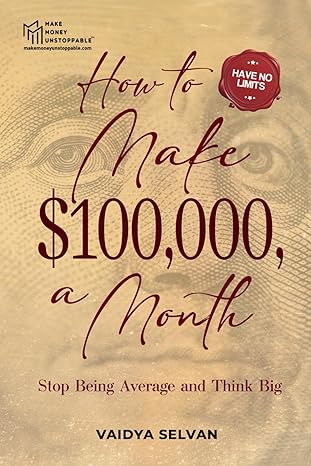
Stop Settling. Start Scaling.
Unlock the mindset, systems, and strategies top earners use to build unstoppable income.
Think Bigger. Earn Smarter.
This free eBook serves as your blueprint for scaling quickly, earning relentlessly, not settling for mediocrity, and living life on your terms.
Inside, you’ll discover:
- The Millionaire Mindset Blueprint
- Income streams that run on autopilot
- Entrepreneur hacks for focus and financial dominance
- One strategy to launch multiple income streams
- How to break free from “just enough”
- Tools to crush limiting beliefs and build your empire
Average doesn’t scale. Vision does. Download now and start your $100K/month transformation.
Yes, this eBook is free. Just drop in your email here to get instant access. ONE eBook per email.
The eBook is sent automatically and should arrive within minutes. Depending on your email provider, it may appear in your Spam or Promotions folder. While we don’t control its exact placement, you can be confident it has been dispatched and is waiting for you.
PLUS: Get Access to exclusive financial tips, learn everything about money and get early blog updates – delivered directly to your inbox .

Monetary History: From Barter to Blockchain
Understanding the historical evolution of money reveals its abstract and adaptive nature. Money has undergone dramatic transformations across centuries, evolving from tangible commodities to intangible digital assets. This journey can help underscore its role as a flexible social construct shaped by economic needs, technological advancements, and cultural shifts.
- Barter systems: Early economies had relied heavily on direct exchange of goods and services, limited by a lack of standardization and divisibility.
- Commodity money: Items like salt, shells, and metals gained acceptance due to perceived intrinsic value and portability.
- Metallic currency: Gold and silver coins introduced durability, uniformity, and state-backed legitimacy.
- Paper money: Represented stored value and facilitated large-scale trade, but required trust in issuing authorities.
- Fiat currency: Modern money may not be backed by physical assets; its value may be maintained by government decree and public confidence.
- Digital currency: Online banking, mobile payments, and virtual wallets may have dematerialized money into data streams.
Cryptographic assets: Blockchain-based tokens can challenge centralized control and redefine trust through decentralized consensus.

This historical lens reveals that money is not a fixed entity. It is a dynamic tool shaped by collective belief, institutional power, and technological innovation.
Institutional Reinforcement of Monetary Illusions
Governments and financial institutions may perpetuate the illusion of money. Central banks, regulatory bodies, and financial markets may operate on systems that reinforce the legitimacy of money. Through mechanisms like monetary policy, interest rates, and fiscal stimulus, these entities may help shape the flow and perception of wealth.
- Fiat currency: Has no backing by physical commodities; its value is purely symbolic.
- Digital transactions: Further abstract money into data and algorithms.
- Debt instruments: Create value from future promises, not present assets.
These systems may rely on trust, regulation, and belief, and not on tangible value. Recognizing this can help demystify financial systems and empower individuals to engage with them more strategically.

Psychological Impact of Monetary Belief Systems
Money influences behavior through cognitive biases and emotional triggers. The illusion of money can affect decision-making, self-worth, and social dynamics. People may often equate financial status with personal value, leading to stress, competition, and distorted priorities.
- Loss aversion: Drives irrational financial behavior.
- Anchoring: Skews perception of fair pricing.
- Social comparison: Fuels dissatisfaction and envy.
By understanding these psychological effects, individuals can cultivate healthier relationships with money and make more rational financial choices.
The Role of Money in Economic Systems
Economic systems may be built on the abstraction of money. From capitalism to socialism, every economic model uses money as a tool for resource allocation. However, the mechanisms may differ in how they interpret and distribute value.
- Capital accumulation: Prioritizes growth and investment.
- Redistribution models: Focus on equity and access.
- Market dynamics: Reflect collective beliefs about value and scarcity.
These systems are not natural laws; they are human constructs. Recognizing this can help open the door to alternative models and innovative thinking about resource management.

Digital Transformation and the Evolution of Currency
Technology may have further abstracted money into virtual realms. The rise of digital wallets, decentralized finance, and algorithmic trading may have detached money from its physical form. This evolution challenges traditional notions of ownership, control, and value.
- Cryptographic assets: Redefine trust and decentralization.
- Automated systems: Execute transactions without human oversight.
- Tokenization: Converts intangible assets into tradable units.
These innovations may highlight the malleability of money and its dependence on technological infrastructure and collective belief.
Practical Strategies for Navigating Monetary Illusions
Awareness of money’s abstract nature may lead to smarter financial decisions. By recognizing that money is a construct, individuals can adopt strategies that can prioritize real value, long-term sustainability, and psychological well-being.

- Focus on utility: Prioritize purchases that enhance quality of life.
- Diversify assets: Reduce dependence on any single form of currency.
- Cultivate financial literacy: Understand systems to make informed choices.
- Practice mindfulness: Avoid emotional reactions to financial fluctuations.
These practices can help empower individuals to rise above the illusion of monetary value and interact with money as a strategic instrument, rather than a reflection of personal worth.
Deconstructing Wealth and Redefining Success
Wealth is not synonymous with money. True wealth encompasses time, freedom, relationships, and purpose. By decoupling success from monetary accumulation, individuals can pursue more fulfilling and resilient lives.
- Time autonomy: The ability to control one’s schedule.
- Purpose alignment: Living in accordance with values.
- Resource access: Availability of essentials and opportunities.
- Emotional well-being: Stability and satisfaction beyond financial metrics.
This redefinition can enable individuals to break free from societal expectations and pursue a more balanced, multidimensional form of prosperity.

Global Implications of Monetary Constructs
The illusion of money can shape geopolitics, inequality, and sustainability. International systems may operate on monetary agreements that can influence trade, development, and power dynamics. These constructs can exacerbate disparities or enable cooperation.
- Exchange rates: Reflect perceived economic strength.
- Debt diplomacy: Leverages financial obligations for influence.
- Resource exploitation: Driven by monetary incentives rather than ecological balance.
Understanding these dynamics can help encourage critical engagement with global systems and support advocacy for equitable and sustainable practices.
Practical Strategies to Help Reframe Your Relationship with Money
- Daily Budgeting with Intentional Awareness
Instead of treating money as a finite resource to hoard, budget based on values and priorities. This can help reframe spending from a scarcity mindset to a purpose-driven one.
- Use zero-based budgeting to assign every unit of currency a role.
- Track spending patterns to identify unconscious habits tied to emotional triggers.
- Align financial decisions with long-term goals, not short-term gratification.

- Detaching Self-Worth from Net Worth
This can help recognize and challenge the internalized belief that financial status equals personal value. May offer strategies to help build emotional resilience and self-esteem independent of income or assets.
- Practice gratitude journaling focused on non-monetary wealth.
- Set goals based on growth, not accumulation.
- Limit exposure to materialistic social media content.
- Building Financial Literacy as a Form of Empowerment
Understanding how money works: interest, inflation, credit, and investment can give individuals the tools to help navigate systems that may often feel opaque or intimidating.
- Learn the basics of compound interest and debt cycles.
- Understand how inflation can affect purchasing power.
- Explore passive income strategies without chasing get-rich-quick schemes.

- Practicing Conscious Consumption
May encourage shifting the perspective from impulsive buying to conscious consumption, where purchases are evaluated for utility, sustainability, and alignment with personal values.
- Ask yourself: Do I really need this, or am I filling a void by buying this?
- Prioritize quality over quantity.
- Support ethical and sustainable products when possible.
- Creating Non-Monetary Value in Daily Life
Highlight how individuals can generate and exchange value without using money, which may help reinforce the idea that true wealth is multidimensional.
- Offer skills or time in exchange for services
- Build community networks for mutual support.
- Invest in relationships, creativity, and learning.

- Reframing Financial Anxiety Through Perspective
Money-related stress may often stem from a deep-seated fear of loss or perceived scarcity. By recognizing money as a belief-based construct rather than a fixed reality, individuals can reduce anxiety and approach financial decisions with greater clarity, confidence, and emotional balance.
- Use mindfulness techniques to manage financial stress.
- Focus on what can be controlled: habits, mindset, and knowledge.
- Avoid catastrophizing future scenarios.
- Using Money as a Tool for Freedom, Not Control
By viewing money as a means to an end rather than the ultimate goal, individuals can shift their mindset toward prioritizing freedom, autonomy, and purpose, rather than mere accumulation.
- Invest in experiences, not in stuff.
- Invest in tools that can enhance time freedom, such as education, automation, delegation, and health.
- Define personal metrics of success beyond income.

Conclusion: Reclaiming Agency in a Monetized World
Money may not exist as a tangible, intrinsic reality, but its influence is deeply embedded in the architecture of modern life. It governs access, shapes identity, and drives decisions across personal, institutional, and global domains. Yet once its abstract nature is fully understood, the illusion begins to unravel, revealing a powerful truth: money is just a financial tool.
By recognizing that currency is a social construct: an agreement upheld by trust, perception, and systemic reinforcement, individuals can begin to reclaim agency over their financial lives. This awareness may help foster financial literacy, emotional resilience, and strategic thinking. It may enable people to question inherited beliefs, resist manipulative economic narratives, and redefine success beyond monetary accumulation.
Empowerment begins with perspective. When money is seen not as a measure of worth but as a symbolic medium of exchange, individuals can shift their focus toward real value: time, purpose, autonomy, and well-being. This shift can encourage conscious consumption, diversified asset strategies, and intentional living. It may also open the door to alternative value systems that prioritize sustainability, equity, and human flourishing.
In a world increasingly shaped by digital finance, algorithmic transactions, and virtual economies, understanding the illusion of money is no longer optional; it is essential. Those who grasp its abstract nature may be better equipped to navigate volatility, challenge inequality, and build resilient lives rooted in clarity and purpose.
Join the conversation! Drop your thoughts in the comments below, and let’s keep the discussion going.
From Experience to insight : Transformational reads for the Strategic mind
Foundational readings for big shifts:
- How to Track Spending without Getting Overwhelmed
- The 7-Day Money Reset Plan: Take Back Control In Just One Week
- Are You Throwing Away $5,000 a Year on Food Waste Without Realizing It?
- The Real Cost of Owning a Big Home
- The Psychology of Spending: Why We Overspend and How to Stop It
- Mastering the Envelope Method
Author: Vaidya Selvan
Welcome to Make Money Unstoppable Personal Finance Made Simple, a blog born out of necessity, a space created from real-life experiences, hard-earned lessons, and a deep-seated desire to share what I wish someone had taught me or had known sooner.

Newsletter Invite
Want more real-world information on Money? Join my newsletter for practical tips, updates on my books, and strategies to help you build financial freedom on your terms.
Yes, the eBook is also free. Just drop in your email here to get instant access. ONE eBook per email.
The eBook is sent automatically and should arrive within minutes. Depending on your email provider, it may appear in your Spam or Promotions folder. While we don’t control its exact placement, you can be confident it has been dispatched and is waiting for you.
#FinancialFreedom #Newsletter #MoneyTips
Like this blog?
Related Blogs