

Why Financial Literacy Must Start in Grade One: Rethinking the Path to Wealth and Success
In a world driven by economic systems, the ability to understand and manage money is not just a skill; it’s a survival tool. Yet, despite its importance, financial literacy remains one of the most neglected subjects in early education. From the moment children enter school, they are taught to follow a linear path: study hard, earn good grades, secure a job, start a family, work for decades, retire, and then supposedly enjoy life with potentially failing health and limited financial resources. This model, while well-intentioned, may fail to equip individuals with the tools to build wealth, achieve economic independence, or make informed financial decisions.
Last Updated: January 11, 2025

Disclaimer: I am not a licensed financial advisor, financial planner, tax professional, attorney, or employment consultant. The information provided in this blog is intended solely for general informational and educational purposes. It should not be interpreted or construed as professional advice regarding financial, legal, tax, employment, or career matters. Always consult with a qualified professional before making decisions related to your finances, investments, legal obligations, employment, or taxes.
Instead of empowering children with money management skills from the start, society often delays financial education until adulthood, if it happens at all. This delay may contribute to widespread financial insecurity, debt accumulation, and a lack of economic mobility.
The question isn’t whether financial literacy should be taught; it’s why we need to wait until adulthood to teach it. Start small, but start early. Children deserve the time and tools to master money before it becomes a source of stress later in life. That’s perfectly logical.
The Systemic Oversight: Why Money Education Is Missing
The traditional education system may often prioritize academic subjects that help prepare students for employment, not entrepreneurship or financial independence. Mathematics, science, and language arts dominate the curriculum, while personal finance, budgeting, saving, and investing are treated as optional or extracurricular. There lies the problem.

If money influences nearly every decision we make in life, where we live, what we eat, how we work, and when we retire, why isn’t it taught from the very beginning? Why are children kept in the dark about financial literacy, only to be thrust into adulthood with no roadmap, forced to learn through costly mistakes and painful trial and error?
We prepare kids for spelling bees, science fairs, and standardized tests, but not for budgeting, saving, or understanding how interest and money work. We teach them to follow instructions, but not how to question financial systems or build wealth. By the time they’re expected to manage credit, pay bills, or invest in their future, they’re already playing catch-up.
It’s not just an oversight; it’s a disservice. Financial literacy isn’t a luxury skill. It’s a life skill. And the earlier it’s taught, the more time children will have to master it, build confidence, and make empowered choices. Keeping them financially uninformed until adulthood doesn’t protect them—it leaves them vulnerable.
It’s time to break the cycle. Let’s stop treating money like a taboo topic and start treating it like the essential subject it is, from grade one onward. There’s no need to wait for schools—teaching kids about money can start right at home
This oversight may stem from a long-standing belief that financial matters are too complex for young minds. However, research and experience show that children are capable of grasping basic financial concepts when taught in age-appropriate ways. By excluding financial education from early learning, we may be inadvertently setting up generations to struggle with money management, fall into debt traps, and miss opportunities for wealth creation.
The Employee Trap: Limited Financial Growth
Unlock your financial freedom.
Download this FREE eBook!.
How to make $100,000/month? Stop being average and think big.
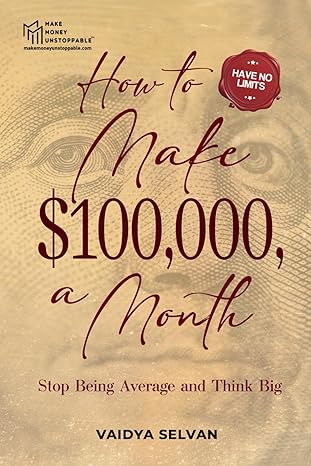
Stop Settling. Start Scaling.
Unlock the mindset, systems, and strategies top earners use to build unstoppable income.
Think Bigger. Earn Smarter.
This free eBook serves as your blueprint for scaling quickly, earning relentlessly, not settling for mediocrity, and living life on your terms.
Inside, you’ll discover:
- The Millionaire Mindset Blueprint
- Income streams that run on autopilot
- Entrepreneur hacks for focus and financial dominance
- One strategy to launch multiple income streams
- How to break free from “just enough”
- Tools to crush limiting beliefs and build your empire
Average doesn’t scale. Vision does. Download now and start your $100K/month transformation.
Yes, this eBook is free. Just drop in your email here to get instant access. ONE eBook per email.
The eBook is sent automatically and should arrive within minutes. Depending on your email provider, it may appear in your Spam or Promotions folder. While we don’t control its exact placement, you can be confident it has been dispatched and is waiting for you.
PLUS: Get Access to exclusive financial tips, learn everything about money and get early blog updates – delivered directly to your inbox .
Employment is often seen as the ultimate goal of education. While jobs may provide stability, they may rarely offer scalability. Salaries are usually capped, promotions are infrequent, and income is tied to time. This model can discourage financial autonomy and limit wealth-building potential.

Without financial literacy, individuals may remain unaware of alternative income streams, passive earnings, and investment strategies. They may work for money instead of learning how to make money work for them. This can lead to decades of financial stagnation, where effort does not translate into exponential growth. Hence, they may feel stuck.
The employee mindset, reinforced by traditional education, may tend to focus on earning a living rather than creating a life. It may emphasize security over freedom, routine over innovation, and conformity over creativity. Financial literacy challenges this notion and mindset.
Starting Early: The Case for Grade-One Financial Literacy
Children are naturally curious and capable of learning complex ideas when presented in relatable ways. Introducing financial literacy in grade one can allow children to develop a healthy relationship with money from the start. They may learn to view money not just as a means of exchange, but as a tool for empowerment, choice, and opportunity.

Early financial education can help foster confidence, responsibility, and critical thinking. It may help children understand the value of work, the importance of saving, and the consequences of spending. These lessons, when reinforced consistently, may become lifelong habits that can shape financial behavior and decision-making.
By teaching financial literacy early, we can also help normalize conversations about money. Children can learn and understand that money is not taboo, mysterious, or reserved for adults. They may thus become comfortable discussing financial goals, asking questions, and seeking guidance.
Curriculum Shift: What Should Be Taught Early On
To build a strong foundation, financial literacy education may include:
- Basic money concepts: Understanding currency, value, and exchange.
- Saving and budgeting: Learning to allocate resources and prioritize needs.
- Income generation: Exploring ways to earn money beyond traditional employment.
- Debt: Understanding the difference between good debt and bad debt.
- Spending wisely: Recognizing wants vs. needs and making informed purchases.
- Goal setting: Planning for short-term and long-term financial objectives.
- Compound interest: Introducing the power of saving and investing early.
- Risk and reward: Understanding financial decision-making and consequences.
- Delayed gratification: Learning the benefits of waiting and planning.
- Financial responsibility: Understanding the impact of choices on future outcomes.

These topics can be introduced through stories, games, activities, and discussions that align with developmental stages. The goal is not to overwhelm children but to empower them with practical, relatable knowledge.
Breaking the Cycle: Rethinking Life Planning
The current life trajectory of education, employment, and retirement may be linear and restrictive. It assumes that financial success comes after decades of labor, often ignoring the potential for early wealth creation. By reimagining this path, individuals can prioritize financial independence, flexibility, and purpose-driven living.
Financial literacy can help disrupt this cycle. It can encourage proactive planning, strategic thinking, and a mindset geared toward abundance rather than survival. It can shift the focus from earning a living to designing a life. Individuals can also learn to set financial goals, evaluate opportunities, and make decisions that align with their values and aspirations.

This shift may also challenge societal norms that equate success with job titles, salaries, and possessions. Financial literacy can help promote a broader definition of success: one that includes freedom, fulfillment, and impact.
Practical Benefits of Early Financial Education
The advantages of early financial literacy are profound and may have far-reaching effects:
- Improved financial habits: Children may develop responsible money behaviors that can carry into adulthood.
- Reduced financial stress: Adults with financial knowledge may experience less anxiety and more control.
- Greater economic mobility: Individuals can pursue opportunities beyond employment and traditional paths by creating multiple streams of income.
- Enhanced decision-making: Financially literate individuals can make informed choices about spending, saving, and investing.
- Increased savings and investment: Early education may lead to better financial outcomes and long-term growth.
- Stronger communities: Financially empowered individuals can help contribute to economic stability, community development, and social progress.
- Resilience in crisis: Financial literacy can equip individuals to navigate uncertainty and adapt to change.

These benefits may extend beyond individuals by influencing families, communities, and economies. Financial literacy is a catalyst for empowerment, equity, and innovation.
The Psychological Impact of Financial Illiteracy
Financial illiteracy doesn’t just affect bank accounts; it affects mental health, relationships, and self-esteem. Individuals who lack financial knowledge may often experience anxiety, shame, and helplessness. They may avoid financial decisions, delay planning, or fall into patterns of denial.
Early financial education can help prevent these outcomes by fostering a sense of control and competence. Children may also learn that money is manageable, that mistakes are learning opportunities, and that planning can lead to progress. This mindset can help support emotional well-being and build resilience.
Financial literacy may also promote autonomy. Individuals learn to set boundaries, make choices, and advocate for themselves. They may thus become less dependent on others and more confident in their ability to shape their future.
Long-Term Economic Consequences of Delayed Money Education

When financial literacy is delayed, the consequences may compound over time. Individuals may enter adulthood with student debt, poor credit, and no savings. They may struggle to buy homes, start businesses, or invest in their future.
This lack of preparation can affect economic mobility, generational wealth, and national productivity. It can perpetuate inequality and limit innovation. By teaching financial literacy early, we create a ripple effect that can strengthen economies, reduce poverty, and promote sustainability.
Financially literate citizens are usually better equipped to participate in markets, support local businesses, and contribute to growth. They may make informed choices that benefit themselves and society.
The Bigger Picture: Financial Literacy as a Social Imperative
Financial literacy is not just a personal asset; it’s a societal necessity. Economically informed citizens can help contribute to stable markets, reduced poverty, and sustainable growth. By prioritizing financial education, societies can foster resilience, innovation, and equity.

Ignoring financial literacy may perpetuate inequality, limit opportunity, and undermine progress. Teaching money skills from grade one is a strategic investment in the future, one that can pay dividends across generations.
Financial literacy can help support democratic participation, environmental responsibility, and global awareness. It can empower individuals to make choices that may reflect their values and contribute to their collective well-being.
Conclusion: Rewriting the Narrative
For too long, society has treated financial literacy as a luxury skill reserved for adulthood, when in reality, it’s a foundational life skill that ought to be taught from the very beginning. Planning for life must include planning for wealth. Without financial knowledge, even the most ambitious dreams can be derailed by poor money decisions, missed opportunities, and preventable setbacks.
Financial literacy should not be an afterthought tucked into elective courses or optional workshops. It should be a cornerstone of education, woven into the fabric of early learning alongside reading, writing, and arithmetic. When children are taught how to manage money from the start: how to save, budget, invest, and think critically about financial choices, they may gain more than just knowledge. They gain confidence, independence, and the ability to shape their own future.
This is not just about teaching kids to count coins or understand price tags. It’s about instilling a mindset of ownership, responsibility, and possibility. It’s about helping them see money not as a source of stress or confusion, but as a tool for building the life they want. When financial literacy becomes second nature, children may grow into adults who are empowered, intentional, and resilient.
True change begins when we rewrite the narrative instead of unconsciously following the status quo.
Join the conversation! Drop your thoughts in the comments below, and let’s keep the discussion going.
From Experience to insight : Transformational reads for the Strategic mind
Foundational readings for big shifts:
- How to Track Spending without Getting Overwhelmed
- The 7-Day Money Reset Plan: Take Back Control In Just One Week
- Are You Throwing Away $5,000 a Year on Food Waste Without Realizing It?
- The Real Cost of Owning a Big Home
- The Psychology of Spending: Why We Overspend and How to Stop It
- Mastering the Envelope Method

Author: Vaidya Selvan
Welcome to Make Money Unstoppable Personal Finance Made Simple, a blog born out of necessity, a space created from real-life experiences, hard-earned lessons, and a deep-seated desire to share what I wish someone had taught me or had known sooner.

Newsletter Invite
Want more real-world information on Money? Join my newsletter for practical tips, updates on my books, and strategies to help you build financial freedom on your terms.
Yes, the eBook is also free. Just drop in your email here to get instant access. ONE eBook per email.
The eBook is sent automatically and should arrive within minutes. Depending on your email provider, it may appear in your Spam or Promotions folder. While we don’t control its exact placement, you can be confident it has been dispatched and is waiting for you.
#FinancialFreedom #Newsletter #MoneyTips
Like this blog?
Related Blogs


1 Comments
prwx0t