


The Real Cost of Commuting: Why Your Travel Time Is the Hidden Expense No One Calculates
Introduction
The Hidden Line Item in Every Commute
Ask most people what their commute costs, and they will give you a number without much hesitation. Fuel, or the price of a transit pass. Maybe parking. Maybe the slow wear and tear on a vehicle that shows up later as a repair bill. These are the visible costs, the ones that arrive as a receipt, a monthly charge, or a line on a statement, and they are usually the only costs anyone ever bothers to add up.
Last Updated: July 26, 2026

Disclaimer: I am not a licensed financial advisor, financial planner, tax professional, attorney, or employment consultant. The information provided in this blog is intended solely for general informational and educational purposes. This content should not be interpreted or construed as professional advice on financial, legal, tax, employment, or career matters. Always consult a qualified professional before making decisions that affect your personal situation. For transparency, some articles may include AI-assisted content. The idea is original and developed independently. All material is reviewed, edited, and approved before publication to ensure clarity and accuracy.
But there is another cost hiding inside every single commute, one that never appears on any statement, never earns its own line item, and is rarely factored into the true price of getting to and from work. That cost is time. Factored across four decades of commuting to and from work, this hidden cost can quietly consume a vast portion of a single life. Think about it. We are mere mortals, with a lifespan that might stretch anywhere from a single year to eighty-five, or even a hundred and twenty, if we are fortunate. So why does this cost, arguably the most significant one of all, never make it into the equation? Because we were taught, from an early age, to value money carefully, and to let time pass without ever being taught to value it the same way.

Every minute spent traveling to work and back is a minute pulled directly from somewhere else in life. It is a minute that could have gone toward rest, toward relationships, toward personal growth, or simply toward recovering from the demands of the day. Yet this time is rarely counted as a real cost. It is treated as though it is free, as though it exists outside the normal rules that apply to every other limited resource a person manages. This is a significant blind spot, and it is worth examining closely, because time spent commuting is never neutral. It is time withdrawn, quietly and repeatedly, from every other part of life, day after day, with no refund available and no way to get it back.
This gap between the financial cost of commuting, which is easy to see, and its true, complete cost, which includes time, is the focus of this blog. The goal here is to build a more honest and more complete way of measuring what a commute actually takes from a person’s life. Not just the fuel or the fare, but the hours.
With that fuller picture in view, decisions about where to live, where to work, and how to travel can finally be made using the full cost, not just the portion that happens to show up on a receipt.
The Complete Guide to Calculating the True Cost of Your Commute

Table of Contents
- Why Commuting Costs Are Usually Measured Incorrectly
- The Two Types of Commuting Costs: Financial and Time-Based
- How to Calculate the Time Cost of a Commute
- The Long-Term Impact of Uncounted Commuting Time
- Categories of Loss Hidden Inside a Commute
- Common Mistakes People Make When Evaluating Commute Costs
- How to Reduce the True Cost of Commuting
- Building a Personal Commute Cost Statement
Conclusion: Counting the Cost That Never Makes It to the Ledger
Unlock your financial freedom.
Download this FREE eBook!.
How to make $100,000/month? Stop being average and think big.

Stop Settling. Start Scaling.
Unlock the mindset, systems, and strategies top earners use to build unstoppable income.
Think Bigger. Earn Smarter.
This free eBook serves as your blueprint for scaling quickly, earning relentlessly, not settling for mediocrity, and living life on your terms.
Inside, you’ll discover:
- The Millionaire Mindset Blueprint
- Income streams that run on autopilot
- Entrepreneur hacks for focus and financial dominance
- One strategy to launch multiple income streams
- How to break free from “just enough”
- Tools to crush limiting beliefs and build your empire
Average doesn’t scale. Vision does. Download now and start your $100K/month transformation.
Yes, this eBook is free. Just drop in your email here to get instant access. ONE eBook per email.
The eBook is sent automatically and should arrive within minutes. Depending on your email provider, it may appear in your Spam or Promotions folder. While we don’t control its exact placement, you can be confident it has been dispatched and is waiting for you.
PLUS: Get Access to exclusive financial tips, learn everything about money and get early blog updates – delivered directly to your inbox .
1. Why Commuting Costs Are Usually Measured Incorrectly
Most cost calculations for commuting stop at money. A person might compare fuel costs, transit fares, or parking fees when deciding between two routes, two jobs, or two places to live. This approach may feel complete because it produces a clear number, but it is incomplete because it ignores the largest cost of all: the time spent traveling.
This narrow way of measuring commuting costs may persist for a few clear reasons:

- Financial costs are easy to see because they involve a transaction, a receipt, or a bill.
- Time costs are invisible because no invoice is ever issued for hours spent traveling.
- Time is often treated as unavoidable, so it does not feel like a cost that can be measured or changed.
- Many people underestimate how much time a commute actually consumes across a full week, month, or year.
Because of this narrow measurement, commuting decisions are frequently made using only half the information needed to understand their real impact.
2. The Two Types of Commuting Costs: Financial and Time-Based
A complete view of commuting requires separating costs into two categories, then evaluating both with equal seriousness.
Financial costs may include:
- Fuel, transit fares, or ride costs
- Parking fees
- Vehicle maintenance and depreciation caused by regular use
- Insurance costs tied to regular travel
Time-based costs may include:
- Time spent physically traveling between two points
- Time spent waiting, such as for transit or in traffic delays
- Time spent on preparation directly tied to commuting, such as additional early wake-up time
- Recovery time needed afterward due to fatigue or stress caused by the commute
Financial costs answer the question, “What did this commute cost in money?” Time-based costs answer a different, often more important question: “What did this commute cost in life?”
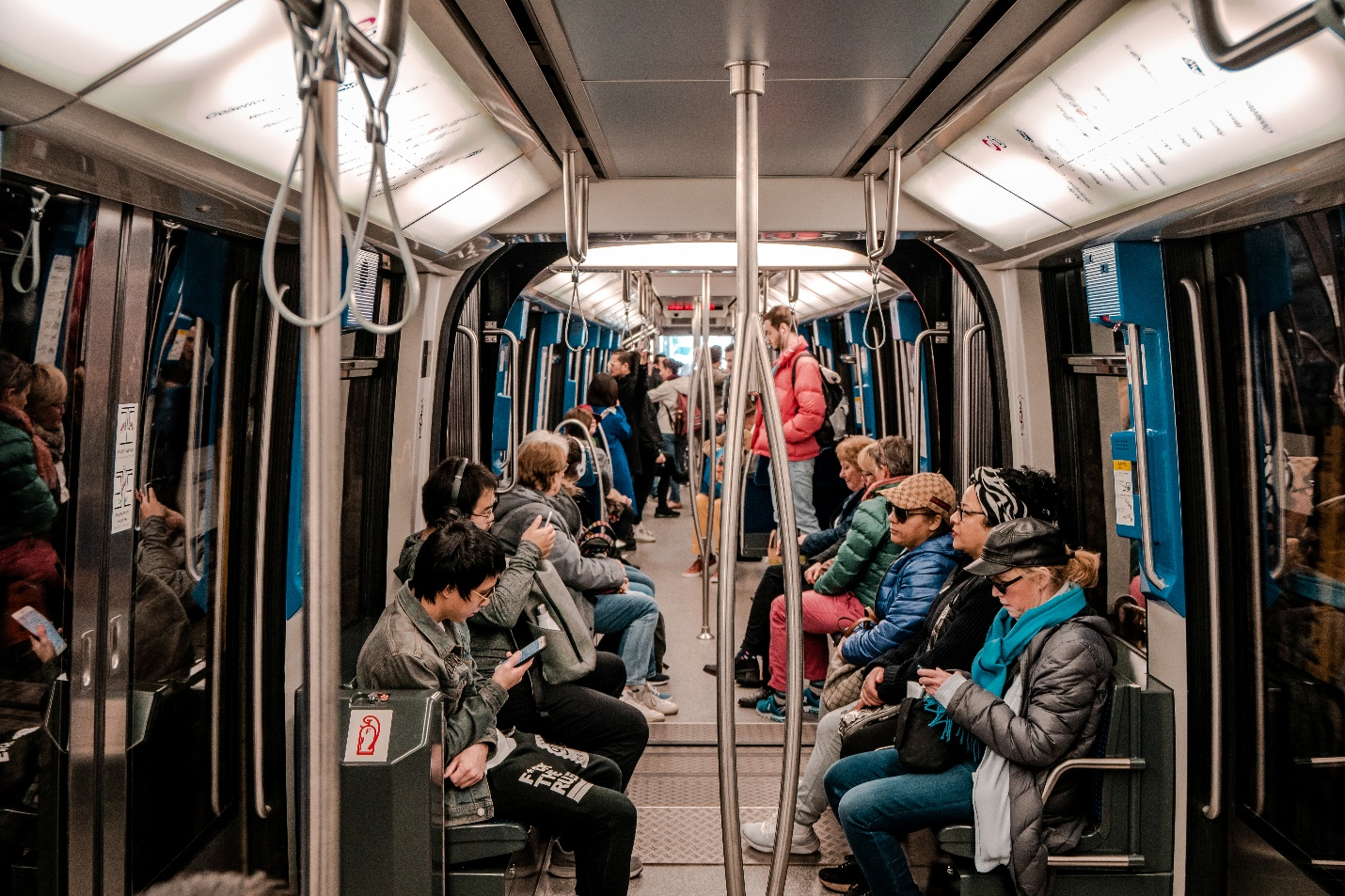
3. How to Calculate the Time Cost of a Commute
Calculating the time cost of a commute is straightforward once it is approached the same way a financial cost would be approached: with clear totals over a set period.
Steps to calculate time cost:
- Record the average one-way commute time.
- Double it to account for the full round trip.
- Multiply by the number of commuting days in a typical week.
- Multiply that weekly total by the number of weeks in a year to find the annual time cost.
- Add any consistent extra time, such as regular delays, waiting periods, or preparation time directly linked to the commute.
Once this number is calculated, it is often far larger than expected. A commute that feels small on any single day can represent a significant block of time when measured across a full year, often equal to several full weeks of waking hours.
4. The Long-Term Impact of Uncounted Commuting Time
When commuting time is never measured, its long-term effects are also never fully understood. This creates a pattern in which the true cost of a daily commute quietly compounds year after year, without ever being reviewed.

Long-term impacts of uncounted commuting time may include:
- A steady reduction in time available for rest and recovery
- Less time for relationships, personal interests, and unstructured downtime
- Increased fatigue, which can reduce focus and performance during work hours
- A gradual sense of time scarcity, even when the actual number of hours in a day has not changed
- Fewer opportunities for physical activity or health-related habits due to time already consumed by travel
- Less to no family time

Because these effects build slowly, they are easy to dismiss individually. Viewed as a yearly total, however, they represent a substantial and repeated cost.
5. Categories of Loss Hidden Inside a Commute
Beyond the raw number of minutes or hours, a commute carries several hidden categories of loss that are rarely acknowledged.
These hidden losses may include:
- Mental energy loss: the focus required to navigate traffic, transfers, or delays, which depletes mental resources before or after work
- Flexibility loss: reduced ability to adjust a schedule due to fixed commuting time blocks
- Health-related loss: reduced time for movement, meal preparation, eating healthy, or sleep
- Opportunity loss: time that could have supported learning, side projects, or additional rest, but was instead spent traveling
- Emotional loss: stress or frustration linked to repeated, predictable delays or crowded conditions

Recognizing these hidden categories can help build a more accurate and complete picture of what a commute truly costs beyond the number on a fuel receipt or transit pass.
6. Common Mistakes People Make When Evaluating Commute Costs
Even when people attempt to think about commuting costs more broadly, several common mistakes limit how accurate that evaluation becomes.
Common mistakes may include:
- Comparing only financial costs between two options, while ignoring the time difference entirely
- Underestimating how delays and waiting periods add to the total time cost
- Assuming a short daily commute is insignificant without calculating its yearly total
- Failing to account for recovery time needed after a particularly tiring commute
- Treating commuting time as fixed and unchangeable, rather than as a cost that can sometimes be reduced or restructured
Avoiding these mistakes requires a shift in mindset: treating commuting time with the same scrutiny that would be applied to any other recurring, significant cost.
7. How to Reduce the True Cost of Commuting
Once the full cost of commuting, both financial and time-based, is understood, it now becomes possible to look for practical ways to reduce that cost.
Practical approaches may include:
- Evaluating whether travel times can be shifted to avoid peak delays
- Considering routes or methods of travel that reduce total time, even if the financial cost is similar
- Combining commuting time with a secondary purpose, such as learning or planning
- Reassessing the overall time cost periodically, especially after any change in schedule, location, or role
- Weighing the time cost alongside the financial cost when comparing two future options, rather than focusing on money alone
These approaches do not eliminate commuting, but they can help ensure that the true cost, not just the financial portion, is factored into our decision-making.
8. Building a Personal Commute Cost Statement
Just as a monthly financial statement provides clarity on spending, a personal commute cost statement can provide the same clarity for time spent traveling.

A simple commute cost statement should include:
- Total commuting time recorded weekly and annually
- Estimated financial cost recorded over the same period
- A combined total that reflects both categories together
- Any notable patterns, such as increases in delays or waiting time
- A short comparison against personal priorities, to determine whether the time cost still feels reasonable
Reviewing this statement periodically, such as once every few months, can help create the same kind of awareness that a financial statement creates: a clear, honest picture that supports better decisions in the future.
Conclusion:
Counting the Cost That Never Makes It to the Ledger
A commute has always had a price, but for most people, that price has only ever been measured in money. Fuel costs, fares, and parking fees are easy to track because they arrive as a bill. Time, on the other hand, disappears silently, absorbed into daily routine without ever being added up or reviewed.

This blog has shown that the true cost of commuting includes far more than money. It includes hours that could have gone toward rest, relationships, health, and personal growth, hours that are spent every single day and rarely questioned. When measured honestly, over a full year, this time cost is often higher and more significant than the financial cost that usually gets all the attention.
Giving commuting time the same level of scrutiny as commuting money does not require complicated tools or major life changes. It requires a simple shift: calculating the full-time cost, reviewing it periodically, and factoring it into decisions the s
Once this hidden cost is finally counted, it becomes possible to make choices about routes, schedules, and even long-term plans that reflect the true, complete price of getting from one place to another.
If you added up your commuting time honestly - both money and hours combined - would you still make the same choice about where you live and work?
Join the conversation! Drop your thoughts in the comments below, and let’s keep the discussion going.
From Experience to insight : Transformational reads for the Strategic mind
Foundational readings for big shifts:
- How to Track Spending without Getting Overwhelmed
- The 7-Day Money Reset Plan: Take Back Control In Just One Week
- Are You Throwing Away $5,000 a Year on Food Waste Without Realizing It?
- The Real Cost of Owning a Big Home
- The Psychology of Spending: Why We Overspend and How to Stop It
- Mastering the Envelope Method

Author: Vaidya Selvan
Welcome to Make Money Unstoppable Personal Finance Made Simple, a blog born out of necessity, a space created from real-life experiences, hard-earned lessons, and a deep-seated desire to share what I wish someone had taught me or had known sooner.

Newsletter Invite
Want more real-world information on Money? Join my newsletter for practical tips, updates on my books, and strategies to help you build financial freedom on your terms.
Yes, the eBook is also free. Just drop in your email here to get instant access. ONE eBook per email.
The eBook is sent automatically and should arrive within minutes. Depending on your email provider, it may appear in your Spam or Promotions folder. While we don’t control its exact placement, you can be confident it has been dispatched and is waiting for you.
#FinancialFreedom #Newsletter #MoneyTips
Like this blog?
Related Blogs