


Why Time Deserves a Monthly Statement Too: A Simple Guide to Tracking Your Most Valuable Asset
Introduction
The Missing Statement in Your Life
Every month, a statement arrives to tell you where your money went. It lists every purchase, every bill, every small leak in your budget, down to the last cent. You read it, you notice patterns, and you make changes. Maybe you cut back on one category. Maybe you set a new limit for another. This simple habit, repeated month after month, gives you a clear sense of control over your money. You always know, roughly, where you stand.
Last Updated: July 24, 2026

Disclaimer: I am not a licensed financial advisor, financial planner, tax professional, attorney, or employment consultant. The information provided in this blog is intended solely for general informational and educational purposes. This content should not be interpreted or construed as professional advice on financial, legal, tax, employment, or career matters. Always consult a qualified professional before making decisions that affect your personal situation. For transparency, some articles may include AI-assisted content. The idea is original and developed independently. All material is reviewed, edited, and approved before publication to ensure clarity and accuracy.
Time never gets this same treatment. No one sends you a monthly summary that shows where your hours went, what tasks consumed them, or how much you have left before the day, the week, or the month runs out. Time disappears quietly, without a receipt, without a warning label, and without a review process. It simply passes, and by the time you notice, it is already gone.
This is a strange gap when you consider how much more limited time is compared to money. Money can be earned again. It can be borrowed, saved, invested, or replaced. Time cannot. Once an hour has passed, there is no mechanism to recover it, no overdraft protection, and no way to transfer unused time from one day into the next. Despite this, most people spend far more energy reviewing their bank balance than they ever spend reviewing how their time was actually used.

This gap between how carefully we track money and how carelessly we treat time is the starting point for a simple but powerful idea: what if time were treated with the same seriousness as money? What if, instead of only asking “where did my money go this month,” people also asked “where did my time go this month,” and actually had an answer?
This blog explores that idea in practical terms. It explains why time deserves the same level of attention as money, how to build a simple and repeatable time-tracking habit, and how small daily choices, when reviewed regularly, add up to a life that feels more balanced, more intentional, and less rushed. The goal here is not to turn every hour of your life into a rigid spreadsheet entry. The goal is awareness. And awareness, just as it does with money, is always the first step toward meaningful control.
The Guide to Building a Personal Time Statement
Table of Contents
- Why Time Management Feels Harder Than Money Management
- What a “Time Statement” Actually Means
- The Real Cost of Ignoring How Time Is Spent
- How to Build Your Own Monthly Time Statement
- Categories to Track in a Time Statement
- Common Time Leaks to Watch For
- Turning Awareness into Better Habits
- Tools and Simple Methods That Support Time Tracking
- Conclusion: Giving Time the Respect It Deserves
Unlock your financial freedom.
Download this FREE eBook!.
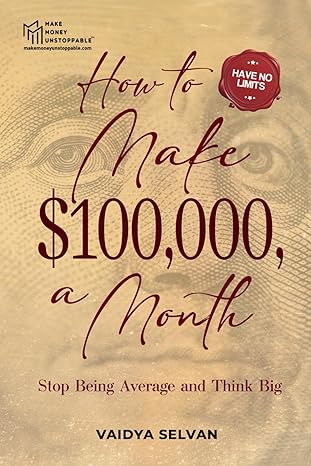
How to make $100,000/month? Stop being average and think big.
Stop Settling. Start Scaling.
Unlock the mindset, systems, and strategies top earners use to build unstoppable income.
Think Bigger. Earn Smarter.
This free eBook serves as your blueprint for scaling quickly, earning relentlessly, not settling for mediocrity, and living life on your terms.
Inside, you’ll discover:
- The Millionaire Mindset Blueprint
- Income streams that run on autopilot
- Entrepreneur hacks for focus and financial dominance
- One strategy to launch multiple income streams
- How to break free from “just enough”
- Tools to crush limiting beliefs and build your empire
Average doesn’t scale. Vision does. Download now and start your $100K/month transformation.
Yes, this eBook is free. Just drop in your email here to get instant access. ONE eBook per email.
The eBook is sent automatically and should arrive within minutes. Depending on your email provider, it may appear in your Spam or Promotions folder. While we don’t control its exact placement, you can be confident it has been dispatched and is waiting for you.
PLUS: Get Access to exclusive financial tips, learn everything about money and get early blog updates – delivered directly to your inbox .

1. Why Time Management Feels Harder Than Money Management
Money is easy to track because it comes in a fixed, countable form. A bank statement shows numbers, and numbers are simple to compare. Time, however, is invisible. It cannot be counted in a wallet or checked on an app screen without effort. This is one reason so many people struggle with time management, even when they are highly skilled at managing money.
A few reasons time tracking feels harder may include:
- Time is intangible, so there is no natural record of how it was used.
- Time spent on small tasks rarely feels significant in the moment, even though it adds up.
- There is no built-in system, like a bank, that automatically logs every hour.
- Many daily habits around time are automatic and unconscious, unlike spending decisions, which usually involve a clear choice.
Because of this, most people go through entire months without ever asking a simple question: where did all my time actually go?

2. What a "Time Statement" Actually Means
A time statement is a simple, personal summary of how hours were used over a set period, usually a week or a month. It works the same way a bank statement works for money.
A time statement may typically include:
- A breakdown of major time categories, such as work, rest, movement, learning, and personal care
- Patterns that repeat across days or weeks
- Time that was spent with intention versus time that passed without much thought
- A comparison between planned time and actual time used
The purpose is not to judge every minute. The purpose is to create a clear, honest picture, the same way a bank statement gives a clear, honest picture of spending.
3. The Real Cost of Ignoring How Time Is Spent
When money is mismanaged, the signs show up quickly: a low balance, an unpaid bill, or a maxed-out limit. Time mismanagement is quieter. It shows up as tiredness, stress, missed goals, and a general feeling of being behind, without a clear reason why.

Ignoring how time is spent can lead to:
- A constant feeling of being busy without any meaningful progress
- Long-term goals that keep getting delayed
- Reduced time for rest, which can affect both health and focus
- Difficulty identifying which habits are helping and which are holding progress back
- A sense that the day, week, or month “just disappeared”
Just as a person cannot fix a financial problem they refuse to look at, a person cannot fix a time problem they never examine.
4. How to Build Your Own Monthly Time Statement
Building a time statement does not require complicated software or hours of extra work. It just requires a simple, repeatable structure.
Steps to create a basic time statement:

- Choose a tracking period, such as one week or one full month.
- Record activities in broad categories rather than tiny detail, to keep the process simple.
- Use short daily check-ins, such as a few minutes each evening, rather than tracking every single moment live.
- At the end of the period, total the time spent in each category.
- Compare the totals against personal goals or priorities.
- Write a summary, similar to a bank statement summary, noting patterns and surprises.
This process turns vague impressions like “I felt busy all month” into clear, specific information that can guide better decisions.
Before making ANY purchase, ask yourself these questions first:
Just as a bank statement separates spending into categories like housing, food, and entertainment, a time statement works best when time is separated into clear categories.
Useful categories may include:
- Work or productive tasks: time spent on core responsibilities and output
- Rest and recovery: sleep, breaks, and downtime that helps restore energy
- Physical movement: exercise, walking, or any active time
- Learning and growth: reading, practicing a skill, or personal development
- Relationships and connection: time spent with others in meaningful ways
- Maintenance tasks: errands, chores, and daily upkeep
- Unaccounted time: time that cannot be clearly explained, often the most revealing category

The unaccounted time category is often the most important, because it usually reveals habits that quietly consume large amounts of time without adding much value.
6. Common Time Leaks to Watch For
A “time leak” works like a financial leak: small, repeated losses that seem harmless alone but add up significantly over a month.
Common time leaks may include:
- Switching frequently between tasks, which reduces focus and wastes transition time
- Extended periods of passive scrolling or browsing without a clear purpose
- Saying yes to commitments that do not match personal priorities
- Delaying decisions, which extends tasks far beyond the time they actually require
- Poor planning, which leads to rushed, inefficient work
- Interruptions that are not managed or limited
Identifying these leaks is similar to spotting a small recurring charge on a bank statement. Alone, it looks minor. Across a month, it can represent a significant loss. Value and respect each hour.

7. Turning Awareness into Better Habits
Tracking time is only useful if it leads to change. A time statement should act as a decision-making tool, not just a record.
Ways to turn awareness into action:
- Set a simple monthly goal based on what the time statement reveals, such as increasing rest or reducing a specific time leak.
- Block dedicated time for high-priority activities before the schedule fills with lower-value tasks.
- Review the time statement at the start of each new period, the same way a budget is reviewed before a new month begins.
- Adjust one habit at a time rather than trying to overhaul an entire schedule at once.
- Celebrate small improvements, since making consistent small changes can help create lasting results over time.
This approach mirrors good financial habits: small, consistent adjustments, guided by clear information, can lead to long-term improvement.
8. Tools and Simple Methods That Support Time Tracking
A time statement does not require expensive or complicated tools. Several simple, accessible methods work well.

Helpful options may include:
- A plain notebook or printed weekly grid for manual tracking
- A basic spreadsheet with categories and daily totals
- A simple timer used during focused work sessions
- A short end-of-day written reflection, summarizing how the day was spent
- Calendar blocking, where time is planned and compared to actual results afterward
The best method is the one that is simple enough to maintain consistently. A complicated system that gets abandoned after a week provides far less value than a simple system used every month.
Conclusion:
Giving Time the Respect It Deserves
Money gets a monthly statement because money is treated as valuable, limited, and worth reviewing. Time deserves the same treatment, and arguably more, because time cannot be replaced, borrowed, or refunded once it is gone.
Building a personal time statement is not about turning life into a strict accounting exercise. It is about creating honest awareness, the same awareness that a bank statement provides for spending. With that awareness, it becomes possible to spot patterns, close time-leaks, and make small, steady changes that can lead to a more balanced and intentional life.

Just as a monthly financial review helps build a healthier relationship with money, a monthly time review can help build a healthier relationship with time itself. The habit is simple to start, easy to maintain, and powerful in its long-term effect. The only requirement is a willingness to look closely at where the hours actually go, and the commitment to make time count as much as money does.
If your time got a monthly statement the way your money does, would you be proud of where it went, or would you be surprised by how badly you'd spent it?
Join the conversation! Drop your thoughts in the comments below, and let’s keep the discussion going.
From Experience to insight : Transformational reads for the Strategic mind
Foundational readings for big shifts:
- How to Track Spending without Getting Overwhelmed
- The 7-Day Money Reset Plan: Take Back Control In Just One Week
- Are You Throwing Away $5,000 a Year on Food Waste Without Realizing It?
- The Real Cost of Owning a Big Home
- The Psychology of Spending: Why We Overspend and How to Stop It
- Mastering the Envelope Method

Author: Vaidya Selvan
Welcome to Make Money Unstoppable Personal Finance Made Simple, a blog born out of necessity, a space created from real-life experiences, hard-earned lessons, and a deep-seated desire to share what I wish someone had taught me or had known sooner.

Newsletter Invite
Want more real-world information on Money? Join my newsletter for practical tips, updates on my books, and strategies to help you build financial freedom on your terms.
Yes, the eBook is also free. Just drop in your email here to get instant access. ONE eBook per email.
The eBook is sent automatically and should arrive within minutes. Depending on your email provider, it may appear in your Spam or Promotions folder. While we don’t control its exact placement, you can be confident it has been dispatched and is waiting for you.
#FinancialFreedom #Newsletter #MoneyTips
Like this blog?
Related Blogs