

The Psychology Behind "Sale": Why Urgency Makes You Buy Faster
Introduction
Why a Ticking Clock Changes How You Shop
The word “sale” does something to the brain before any real thinking ever happens. A red banner, a countdown timer, or the phrase “limited time only” can shift a calm, rational shopper into someone who suddenly feels they need to decide right now. This is not an accident. It is the result of decades of research into consumer psychology, applied deliberately to shape buying behavior.
Last Updated: July 14, 2026

Disclaimer: I am not a licensed financial advisor, financial planner, tax professional, attorney, or employment consultant. The information provided in this blog is intended solely for general informational and educational purposes. This content should not be interpreted or construed as professional advice on financial, legal, tax, employment, or career matters. Always consult a qualified professional before making decisions that affect your personal situation. For transparency, some articles may include AI-assisted content. The idea is original and developed independently. All material is reviewed, edited, and approved before publication to ensure clarity and accuracy.
Urgency and scarcity are two of the most powerful tools in marketing, not because they trick people into wanting something they do not want, but because they interrupt the normal decision-making process. They shrink the amount of time a person spends weighing a purchase, and shrinking that time can change the outcome in favor of the vendor. Understanding why this works is not about becoming cynical toward every promotion. It is about recognizing the psychological levers being pulled, so that a buying decision can be made with full awareness rather than under quiet pressure.
This blog explains the possible logic and psychology behind sales and urgency-driven promotions, how these tactics are typically built, and how a shopper can evaluate them clearly. The focus is entirely on the underlying principles, which may apply broadly across almost any kind of sale or promotional offer.

A Complete Guide to the Psychology of Sales and Urgency Marketing
Table of Contents
- What Urgency Marketing Actually Means
- The Psychological Principles Behind Every Sale
- Scarcity and Why Limited Availability Feels Powerful
- Loss Aversion: Fear of Missing Out Explained
- Anchoring and the Illusion of a Bigger Discount
- Social Proof and the Pressure of the Crowd
- Common Urgency Tactics Used in Promotions
- Why These Tactics Work on the Brain
- The Risks and Downsides of Constant Urgency
- How to Evaluate a Sale Before You Buy
- Practical Steps to Shop with a Clear Head
- Conclusion: Slowing Down Is the Real Advantage
What Urgency Marketing Actually Means
Urgency marketing is the deliberate use of time pressure, scarcity, or exclusivity to encourage faster purchasing decisions. Instead of presenting a product on its own merits and letting a buyer decide at their own pace, urgency marketing introduces a reason to act immediately.

Unlock your financial freedom.
Download this FREE eBook!.
How to make $100,000/month? Stop being average and think big.
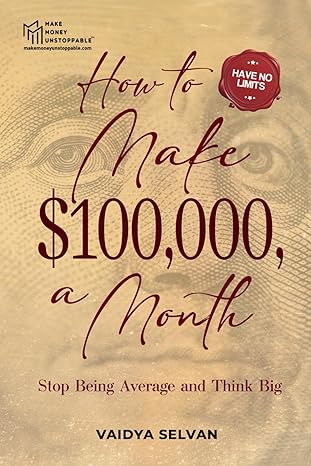
Stop Settling. Start Scaling.
Unlock the mindset, systems, and strategies top earners use to build unstoppable income.
Think Bigger. Earn Smarter.
This free eBook serves as your blueprint for scaling quickly, earning relentlessly, not settling for mediocrity, and living life on your terms.
Inside, you’ll discover:
- The Millionaire Mindset Blueprint
- Income streams that run on autopilot
- Entrepreneur hacks for focus and financial dominance
- One strategy to launch multiple income streams
- How to break free from “just enough”
- Tools to crush limiting beliefs and build your empire
Average doesn’t scale. Vision does. Download now and start your $100K/month transformation.
Yes, this eBook is free. Just drop in your email here to get instant access. ONE eBook per email.
The eBook is sent automatically and should arrive within minutes. Depending on your email provider, it may appear in your Spam or Promotions folder. While we don’t control its exact placement, you can be confident it has been dispatched and is waiting for you.
PLUS: Get Access to exclusive financial tips, learn everything about money and get early blog updates – delivered directly to your inbox .
Key characteristics of urgency marketing may include:
- A defined or implied deadline, whether real or artificially created.
- Language that signals limited availability, such as low stock warnings.
- Visual cues like countdown timers, flashing banners, or bold color contrasts.
- A framing that positions delay as a loss.
The goal is not to inform. The goal is to compress the decision-making window so that careful comparison becomes less likely.
The Psychological Principles Behind Every Sale
Sales are not random. They are built on well-documented psychological patterns that may influence how people process risk, reward, and decision-making under pressure.
- Bounded rationality: the idea that people make decisions with limited time, information, and mental energy, rather than as perfectly logical calculators.
- Emotional decision-making: where feelings such as excitement, fear, or anxiety may often drive a choice before logical evaluation catches up.
- Cognitive shortcuts:mental rules of thumb that people rely on to make fast decisions, especially under time pressure.
- The desire to avoid regret:which can be more motivating than the desire to gain something new.

Marketers understand these patterns well, and promotional strategies are frequently designed around them.
Scarcity and Why Limited Availability Feels Powerful
Scarcity is one of the oldest and most effective psychological triggers in existence. When something appears limited, it is automatically perceived as more valuable, regardless of its actual worth.
- Limited quantity messaging may suggest that other people are already interested, increasing perceived demand.
- Scarcity shifts focus away from whether a product is needed, toward whether it will still be available later.
- The fear of losing access to an option can outweigh careful consideration of whether the option is actually a good fit.
- Even artificial scarcity, where availability is not truly limited, can trigger the same psychological response as genuine scarcity.
This is why phrases suggesting low stock or exclusive access are so commonly seen across many types of promotions.

Loss Aversion: Fear of Missing Out Explained
Loss aversion is a well-established psychological principle showing that people may feel the pain of losing something more intensely than the pleasure of gaining something of equal value.
- A promotion framed as “don’t miss out” taps directly into this bias, making inaction feel like a loss rather than a neutral choice.
- The fear of missing a deal can override rational questions like whether the item is genuinely needed or affordable.
- Time-limited offers convert a simple purchase decision into an emotional one, where the perceived loss of the deal itself becomes part of the calculation.
- This bias is often stronger than logical appeals about price or quality, which is why urgency-based messaging tends to outperform purely informational messaging.

Anchoring and the Illusion of a Bigger Discount
Anchoring is the tendency to rely heavily on the first piece of information encountered when making a decision, even if that information is arbitrary or inflated.
- A higher reference price shown alongside a “sale” price creates an anchor, making the discounted price feel more generous than it may actually be.
- The size of a percentage discount can be more persuasive than the actual final price, even when the final price is the only number that truly matters.
- Repeated exposure to inflated reference prices over time can shift a buyer’s overall sense of what a fair price may look like.
- Anchoring may work even when a buyer is aware of the technique, because it operates quickly and often below the level of conscious analysis.
Social Proof and the Pressure of the Crowd
People are strongly influenced by the perceived behavior of others, especially under uncertainty.
- Messaging that highlights how many people have purchased or viewed an item recently signals popularity and can increase perceived trustworthiness.
- Visible countdown indicators showing that other shoppers are currently viewing the same item add a layer of competitive urgency.
- A sense of “everyone else is doing this” can reduce the instinct to pause, think logically, and evaluate independently.
- Social proof, when combined with urgency, may create a particularly strong psychological pull, since it merges fear of missing out with a desire to conform.
Common Urgency Tactics Used in Promotions
Several recurring tactics appear across many types of sales and promotions, regardless of industry. Here are a few:
- Countdown timers indicating a deal will expire soon.
- Messaging such as limited stock, only a few remaining, or while supplies last.
- Flash sales that last for an unusually short and clearly stated window.
- Exclusive or members-only offers that create a sense of special access.
- Bundled time-sensitive incentives, such as a bonus item included only if a purchase is made immediately.
- Early access windows that reward fast decision-making with additional perks.
Why These Tactics Work on the Brain
Urgency and scarcity tactics work because they interact directly with how the brain processes threat and reward.

- Time pressure may activate a more instinctive, faster mode of thinking, reducing reliance on careful analysis.
- Perceived scarcity can trigger a mild stress response, which narrows focus and increases impulsivity.
- Repeated exposure to urgency cues can create a conditioned response over time, making a person more susceptible to similar cues in the future.
- The combination of emotional arousal and limited time may reduce the mental space available for weighing alternatives.
The Risks and Downsides of Constant Urgency
While these tactics are effective, they may carry risks to both buyers and businesses that rely on them too heavily.
- Overuse can lead to consumer fatigue, where repeated false urgency may reduce trust and effectiveness over time.
- Buyers who feel manipulated after the fact may develop lasting skepticism toward a brand or promotion type.
- Decisions made under artificial time pressure may be more likely to result in regret or buyer’s remorse.
- Constant discounting can distort a buyer’s sense of a product’s real value, making full-price purchases feel unfair even when they are reasonable.

How to Evaluate a Sale Before You Buy Anything
A more deliberate approach can help separate a genuinely good offer from one built primarily on psychological pressure.
- Ask whether the item would still be wanted or needed without the time pressure attached.
- Check whether the “original” reference price reflects a realistic, commonly available price, rather than an inflated anchor.
- Consider whether the urgency is tied to a verifiable, specific reason, or whether it gets repeated indefinitely across many previous promotions.
- Compare the promoted price against typical pricing over a longer period of time, not just the moment of the sale.
Practical Steps to Shop with a Clear Head
A few consistent habits can reduce the influence of urgency-driven tactics on everyday buying decisions.

- Build in a deliberate pause, even briefly, before completing any purchase framed as time-limited.
- Separate the emotional pull of “missing out” from the practical question of true need and value.
- Track prices over time where possible, to judge whether a sale price is meaningfully different from the norm or is true.
- Be especially cautious of urgency cues that reappear frequently, since genuine scarcity is rarely constant.
- Focus on the final total price, not the size of the advertised discount.
Conclusion:
Slowing Down Is the Real Advantage
Urgency and scarcity are not inherently dishonest, but they are deliberately engineered to reduce the time and mental space available for careful decision-making. Every countdown timer, low-stock warning, and flash sale is built on well-understood psychological principles designed to move a buyer from consideration to action as quickly as possible. And to result in a sale.
Recognizing these tactics does not require rejecting every promotion or becoming distrustful of all sales. It requires a simple shift: treating urgency as information about the marketing strategy being used, not as a reliable signal of true value or necessity. The most effective defense against pressure-driven buying is not speed, but a brief, deliberate pause, long enough to ask whether a decision would still make sense without the clock running on the side or beside you. That pause, practiced consistently, may often be the clearest advantage a buyer can have. And this is where you will have total control over your money.

How many times have you bought something during a 'sale' or 'limited time' promotion, only to wonder afterward whether you would have bought it at all without the clock ticking?
Join the conversation! Drop your thoughts in the comments below, and let’s keep the discussion going.
From Experience to insight : Transformational reads for the Strategic mind
Foundational readings for big shifts:
- How to Track Spending without Getting Overwhelmed
- The 7-Day Money Reset Plan: Take Back Control In Just One Week
- Are You Throwing Away $5,000 a Year on Food Waste Without Realizing It?
- The Real Cost of Owning a Big Home
- The Psychology of Spending: Why We Overspend and How to Stop It
- Mastering the Envelope Method

Author: Vaidya Selvan
Welcome to Make Money Unstoppable Personal Finance Made Simple, a blog born out of necessity, a space created from real-life experiences, hard-earned lessons, and a deep-seated desire to share what I wish someone had taught me or had known sooner.

Newsletter Invite
Want more real-world information on Money? Join my newsletter for practical tips, updates on my books, and strategies to help you build financial freedom on your terms.
Yes, the eBook is also free. Just drop in your email here to get instant access. ONE eBook per email.
The eBook is sent automatically and should arrive within minutes. Depending on your email provider, it may appear in your Spam or Promotions folder. While we don’t control its exact placement, you can be confident it has been dispatched and is waiting for you.
#FinancialFreedom #Newsletter #MoneyTips
Like this blog?
Related Blogs